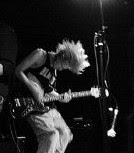
"It's funny what kinds of people dance," Freshmillions bassist/programmer/funkiness collector Geoff Earle muses. "Jadedness is kind of the enemy here. Humans who have a lack of pretension will dance." Earle, guitarist/keyboardist Cody Skinner, and drummer Dan Skarbek don't seem all that self-conscious themselves. They've been known to take the stage in bathrobes or tracksuits, and their music exists in that postmodern space where there's no rules about where sounds originate. Live instruments, loops, and samples of all sorts of provenance are fair game, and the only objective is that people listening get moving to it, beginning with the three guys on stage.
Although the Freshmillions machine hums along so nicely now it's hard to believe they didn't have everything worked out from the beginning, Cody says there was "zero, zero orchestration." Rather the band in its present form grew out a five-year search by Geoff to find the right outlet for his beatmaking abilities. When he was 22 a college buddy who lucked into a job with Columbia Records offered him the chance to work with a big library of pre-cleared samples. The results were encouraging, with Geoff's work getting serious consideration for use by big-time artists. Although none of his efforts ended up Top 40 smashes, the confidence boost was enough: "I made a lot more beats!"
Upon settling in Austin, Geoff began to transition from producer to bandleader. Freshmillions didn't find a stable lineup immediately. At one point they had a vibes player; Bryan and Trivett of The Sword passed through for two shows. Geoff grew up with Cody, who moved to Austin from Denton in July of '09. He knew Dan from music business school in New Orleans; when his name showed up on a Freshmillions guestlist, Geoff and Cody immediately started thinking about drafting him into the band. They got their man. "Now I'm playing with dudes who are better at their instruments than I am," says Geoff. "I think that's why the band's taken off this year!"
To the casual observer, the completed lineup is a guitar-bass-drums power trio. But their sound, and their process, are more complex. "I'll make a beat and bring it to the table," says Geoff. "That's how the project started." A number of the songs on their stellar debut -- "Million Dollar Bill Pt. 1," "Monty," "Forever" -- he completed writing himself around his initial sampling. Now that Cody and Dan are on board, Freshmillions work together to build instrumental parts around Geoff's tracks. "He's going to bring in a snippet, or maybe multiple snippets," says Cody.
There's no doubt about the extra power the live drums and guitar bring. "You want the full palette of sounds available to you," Cody says. "People never get tired of seeing people play music -- it's a different energy." Freshmillions had to figure out that they were a rock band to find the audiences most receptive to their grooves. Cody: "We played a lot of shows with dance groups and electronic bands and people didn't dance!"
Cody and Geoff's list of favorite Austin bands cross the divide between rock and "other," and many are trying like Freshmillions to straddle both. Neiliyo, Butcher Bear & Charlie, Fingaar Bangaar, Focus Group, Zlam Dunk, Woodgrain, Spells, and Sip Sip are all mentioned. "Zorch is top of the list," Cody says (and I tend to agree). As for favorite venues, they're one of the first bands I've spoken to with nothing but nice things to say about the Beauty Bar. "You would never expect it," but according to these gentlemen the bartenders and the staff in general at the often-maligned 7th Street disco have never been anything but nice to them. "The 21st Street Co-Op show was the most fun we've ever had on stage," says Cody -- glad I caught that gig! They're also looking forward to playing Scoot Inn again.
Next steps? For now, the plan is weekend shows in as many southern towns as possible. "I wonder if we would do well in Europe," Geoff asks. "Guess we got to book Europe and see what happens," Cody responds.
I catch a ride with the guys to their show at the Beauty Bar, and while we're chatting on the way I learn a few more interesting things about Freshmillions. They can't drink or do anything else mind-altering before they play, because keeping time with the loops and samples requires their full unadulterated attention. This is particularly challenging when the opening bands are bad! Another thing I didn't know about is how fully their electronic equipment is integrated with their guitars. Commands from the computer over by Geoff go through MIDI cables and operate Cody's guitar effects. If either musician needs their hands free to play a keyboard part, the computer tells their pedals when to loop a bass or guitar part and for how long. If there's delay or something else that needs to be timed to the music, the computer sends the necessary information to the effect. Freshmillions may seem like goofy, fun-loving guys -- and they are -- but when it comes to their music they're all business, and they know the technology front to back.
Tuesday, October 12, 2010

Sunday, October 10, 2010
Festivities
Ditch the Fest Fest
Cheer Up Charlie's, 10/9
It's been almost exactly a year since Anna C. and I left Boulder, Colorado to move to Austin. I remember, because it's now the second October in a row that I've been disgusted by the degree to which corporate entities control the agendas of music fans in the "live music capital." Austin's reputation among outsiders does not line up with the reality. We're supposed to have the most discerning, open-minded music fans anywhere, respecting tradition but not bound to it, eager for new sounds, driven to be the first and not the last on a rising new act's bandwagon. Fans like myself and Anna. Unfortunately, the town's receptivity to music is being manipulated by entities that do not have the advancement of art and culture first and foremost in their minds. For an unwitting Austin music fan, the concert calendar is a constant stream of "must-see" imports, attached to steep ticket prices and promoted unceasingly by a crappy, slothful local press who are complicit in the booking agencies' scheme to suck in every last dollar of disposable hipster income.
If you're just a tool with a trust fund, it doesn't matter to me if you want to spend forty-five bucks on Strokes tickets... knock yourself out. But what really bothers me about Austin's cozy hype industry is the way that it sucks in local musicians. A lot of people move here intending very seriously to give making music their lives a shot. The less self-aware ones get stuck on the merry-go-round. They have to go to the Pixies show. They have to buy a three-day pass to the festival. They have to spend a month's salary to get the shiniest plutonium wristband (or whatever the hell) in March.
As a class musicians tend to have inflated opinions of their own importance and a deep-seated need for approval. All they see talked about in the local press is the big-time shows, so they get brainwashed along with everybody else into thinking that there's no other game in town. They don't see any point in going to see other local bands. They feel the only path to success for their own projects is getting written about by some blog in Brooklyn and ignore promoting to local fans and working together with other bands in the same community. They post lists of all the out-of-town buzz bands they hope to open for to Craigslist, ignoring the fact that the majority of big shows shut out local bands entirely.
Explain to me how else some 40 of Austin's finest acts were free this Saturday for Ditch the Fest Fest. We weren't able to stay at Cheer Up Charlie's for the entire day, but in about three hours' time we saw an impressive variety of music, from Pataphysics' comedy garage to Missions' Euro-tastic vintage electro bleeping. Megafauna brought blistering solos, Agent Ribbons whispered spooky poetry, and Hatchet Wound just rode an ugly, screaming, noise-bass groove until it somehow turned pretty. As we walked in A Giant Dog's Sabrina was out-howling the entire Happen-Ins. Everywhere we looked, there was someone cool we had met before during our yearlong immersion in Austin music -- Zorch's producer Evan, the Sour Notes' bassist Amarah, KVRX folks, local writer and impresario DIY Danna. And also there was a guy dressed as a pirate.
My point is, if you want to be a bigger part of the Austin music scene (whether you're a musician, writer, filmmaker, promoter, or all of the above), you need to put yourself in places where fans and supporters of local music are going to be. Judging by the all the idiots with out-of-state license plates driving the wrong way on South Lamar last night as we were coming home from another awesome free show at the Rockin' Tomato, those folks weren't at Zilker Park this weekend.
Let me a take a moment to recognize the band Red Leaves. I've written about them pretty harshly in the past. We saw them at the first show we ever went to at Beerland last fall and they sucked. We encountered them a few times after that and they quickly became a band that we would avoid at all costs. At the time they seemed more conscious of image than musical coherence, with their guitarist, bassist, and drummer all grinding away oblivious to one another and their token female member plunking away ridiculously late on guitar or bass. To Anna they became the go-to example of a local band where a woman was used as a prop to increase visibility rather than a creatively engaged member. Well, we saw them yesterday and although it was the same lineup and same setup, we have to change our attitude now. They killed it. The bass and drums were far more involved in developing the songs, those late guitar and bass parts are right on time now, and since they've gotten their musical issues in line the thing that always made them appealing, really melodic male and female vocals and even harmonies, pop out in a brand new way. The boy singer could stand to quit imitating Thurston Moore's vocal mannerisms so closely, but they have gone from unwatchable to maybe the best band we saw yesterday. In the nick of time, too, because with the proliferation of local No Wave bands in the wake of Casual Victim Pile, there's a need for a band like this that has the ability to bring real songwriting to the table. There's another lesson in there somewhere. Keep playing!
Quickly: The Happen-Ins are great dressers, but they really need to find some sort of modern twist to their Stones-Band-Dylan 70's rock sound, because they bring nothing new to the table and it's obvious to a lot more people than just me.... Missions have a little bit of that static science-class feeling a lot of all-electronic acts have as a live band, but their songs progress and are distinguishable from one another. Pretty sure one of their members is also in Love at 20, only she actually showed a pulse and some personality playing with this band. Hatchet Wound remind me of PiL, and their super-basic bass and drums setup works well for what it does. I suspect though that if one of the two of them weren't female, they would have trouble booking shows with this stripped-down and repetitive a style. Lead guitar would be nice. Agent Ribbons are new to Austin but arrived with a ton of hype. I can see why people praise their songs, which are warped and twisted while still having really simple rockabilly underpinnings. They play very quietly, which is nice because their lyrics are great and you can hear them clearly. Still, I think they'd benefit as a live band if their drummer would go ahead and hit the drums like they're not going to hit back.
Cheer Up Charlie's, 10/9
It's been almost exactly a year since Anna C. and I left Boulder, Colorado to move to Austin. I remember, because it's now the second October in a row that I've been disgusted by the degree to which corporate entities control the agendas of music fans in the "live music capital." Austin's reputation among outsiders does not line up with the reality. We're supposed to have the most discerning, open-minded music fans anywhere, respecting tradition but not bound to it, eager for new sounds, driven to be the first and not the last on a rising new act's bandwagon. Fans like myself and Anna. Unfortunately, the town's receptivity to music is being manipulated by entities that do not have the advancement of art and culture first and foremost in their minds. For an unwitting Austin music fan, the concert calendar is a constant stream of "must-see" imports, attached to steep ticket prices and promoted unceasingly by a crappy, slothful local press who are complicit in the booking agencies' scheme to suck in every last dollar of disposable hipster income.
If you're just a tool with a trust fund, it doesn't matter to me if you want to spend forty-five bucks on Strokes tickets... knock yourself out. But what really bothers me about Austin's cozy hype industry is the way that it sucks in local musicians. A lot of people move here intending very seriously to give making music their lives a shot. The less self-aware ones get stuck on the merry-go-round. They have to go to the Pixies show. They have to buy a three-day pass to the festival. They have to spend a month's salary to get the shiniest plutonium wristband (or whatever the hell) in March.
As a class musicians tend to have inflated opinions of their own importance and a deep-seated need for approval. All they see talked about in the local press is the big-time shows, so they get brainwashed along with everybody else into thinking that there's no other game in town. They don't see any point in going to see other local bands. They feel the only path to success for their own projects is getting written about by some blog in Brooklyn and ignore promoting to local fans and working together with other bands in the same community. They post lists of all the out-of-town buzz bands they hope to open for to Craigslist, ignoring the fact that the majority of big shows shut out local bands entirely.
Explain to me how else some 40 of Austin's finest acts were free this Saturday for Ditch the Fest Fest. We weren't able to stay at Cheer Up Charlie's for the entire day, but in about three hours' time we saw an impressive variety of music, from Pataphysics' comedy garage to Missions' Euro-tastic vintage electro bleeping. Megafauna brought blistering solos, Agent Ribbons whispered spooky poetry, and Hatchet Wound just rode an ugly, screaming, noise-bass groove until it somehow turned pretty. As we walked in A Giant Dog's Sabrina was out-howling the entire Happen-Ins. Everywhere we looked, there was someone cool we had met before during our yearlong immersion in Austin music -- Zorch's producer Evan, the Sour Notes' bassist Amarah, KVRX folks, local writer and impresario DIY Danna. And also there was a guy dressed as a pirate.
My point is, if you want to be a bigger part of the Austin music scene (whether you're a musician, writer, filmmaker, promoter, or all of the above), you need to put yourself in places where fans and supporters of local music are going to be. Judging by the all the idiots with out-of-state license plates driving the wrong way on South Lamar last night as we were coming home from another awesome free show at the Rockin' Tomato, those folks weren't at Zilker Park this weekend.
Let me a take a moment to recognize the band Red Leaves. I've written about them pretty harshly in the past. We saw them at the first show we ever went to at Beerland last fall and they sucked. We encountered them a few times after that and they quickly became a band that we would avoid at all costs. At the time they seemed more conscious of image than musical coherence, with their guitarist, bassist, and drummer all grinding away oblivious to one another and their token female member plunking away ridiculously late on guitar or bass. To Anna they became the go-to example of a local band where a woman was used as a prop to increase visibility rather than a creatively engaged member. Well, we saw them yesterday and although it was the same lineup and same setup, we have to change our attitude now. They killed it. The bass and drums were far more involved in developing the songs, those late guitar and bass parts are right on time now, and since they've gotten their musical issues in line the thing that always made them appealing, really melodic male and female vocals and even harmonies, pop out in a brand new way. The boy singer could stand to quit imitating Thurston Moore's vocal mannerisms so closely, but they have gone from unwatchable to maybe the best band we saw yesterday. In the nick of time, too, because with the proliferation of local No Wave bands in the wake of Casual Victim Pile, there's a need for a band like this that has the ability to bring real songwriting to the table. There's another lesson in there somewhere. Keep playing!
Quickly: The Happen-Ins are great dressers, but they really need to find some sort of modern twist to their Stones-Band-Dylan 70's rock sound, because they bring nothing new to the table and it's obvious to a lot more people than just me.... Missions have a little bit of that static science-class feeling a lot of all-electronic acts have as a live band, but their songs progress and are distinguishable from one another. Pretty sure one of their members is also in Love at 20, only she actually showed a pulse and some personality playing with this band. Hatchet Wound remind me of PiL, and their super-basic bass and drums setup works well for what it does. I suspect though that if one of the two of them weren't female, they would have trouble booking shows with this stripped-down and repetitive a style. Lead guitar would be nice. Agent Ribbons are new to Austin but arrived with a ton of hype. I can see why people praise their songs, which are warped and twisted while still having really simple rockabilly underpinnings. They play very quietly, which is nice because their lyrics are great and you can hear them clearly. Still, I think they'd benefit as a live band if their drummer would go ahead and hit the drums like they're not going to hit back.
Friday, October 8, 2010
Fighting for Life
Don't Shoot the Messenger
Mostly Dead
Usually I listen to a disc about three times front to back for a review. This doesn't prevent me from writing things I will change my mind about later, but it seems to be the fairest method. There are exceptions. A lot of droning home-recorded "experimental" music doesn't need me to sit through it more than once to reach a conclusion. And some songwriting identifies itself immediately as incompetent and/or plagiarized. All art is not created equal. I make no effort to treat musicians who are terrible equally to ones who are clearly talented, and neither should you. If your friends' band sucks and you know it does, you're not doing them any favors blowing smoke.
Employing seven band members and a long roster of guests, all working through parts intensely composed by Mostly Dead leader Andrew Nolte, Don't Shoot the Messenger is impenetrable on first, second, and even third approach. It's quite obviously the work of musicians who have mastered their art, as the constant bone-jarring meter shifts and smarty-pants vocal and instrumental harmonies will regularly remind you. Their combination of music-major chops and rambling hippie idealism doesn't leave you any really obvious comparisons. The only band I can think of with a similar hybrid of Danny Elfman and Tom Waits is Colorado's similarly inaccessible Orphaned Gears, a band whose ambition I admired -- and whose exhausting song lengths and triple-stuffed arrangements left me grasping for excuses to not have to listen to them.
Don't Shoot the Messenger is honest about the amount of work it's going to require from the listener, beginning as it does with tracks like "Fallen Out" that force all of Mostly Dead's details into short, tense songs. "Expect the Unexpected," with its rushing chant of "it could happen to you" at the climax, illustrates well how Nolte's compositions divide out accessible, rhythmically square parts with unsettling sections. Violin and horns interject in weird spaces, and abrasive guitar effects add to the feeling of displacement. Only towards the end of Messenger's running order do songs like the salsa "Hypnosis & Patches" and the beatnik swing "How Can You Know?" let the band stretch out in a more traditional way. Mostly Dead throw so much at the ear right out of the gate, it's possible to overlook how many really immediate elements there are to the album -- the string quartet that opens "Goodbye, Blue Planet," the jazzy fingersnaps and operatic female vocals of "Spoonful of Spin," big gang choruses on many tracks.
Although it's not going to be everyone's cup of tea, Don't Shoot the Messenger strikes me as the definition of an artistically successful record. Why makes me say that? There's a method to Nolte's madness. If the music seeks to constantly keep the listener from getting comfortable, the lyrics answer the obvious question as to why the musicians want to elicit that reaction. At first the idealism of these broadsides, which use "you" and "we" pronouns just as often as "I" and "me," might be distasteful to more cynical listeners. I don't like so much to be lectured by my record albums. But if the big question over music and art in general is, "What's the point?", I don't have to ask myself why Mostly Dead sound the way they do. This is difficult, personal music crafted with a message in mind. As a critic, whether I agree with the message or not isn't at issue.
Don't Shoot the Messenger does a really fine job of creating an atmosphere that suits the lyrics. Mostly Dead are passionate about the state of our environment, culture, and relationships. Someone interpreting their music incompletely might see them as relentlessly negative, but they are conscientious about discussing solutions. In the same way they construct difficult songs but leave care to bring in anthemic, simpler sections when they are needed, Nolte isn't monochromatic with his lyrics. At points he can sound like he's issuing a laundry list of complaints, but he finds ways to mix it up. One is using sweeter vocals from bassist Mo Born and guest female singers to contrast his own raspy, hectoring tone. The instrumental arrangements often bring in a humor and lightness that the lyrics lack. Who can be unhappy listening to slide whistle, or a good sheepish melodica solo?
This was a big project. It sounds like one! A lot of very talented players worked hard to put this thing together. That's why it would be a shame if Mostly Dead did nothing for the whole length of Don't Shoot the Messenger besides announce how screwed the human race is. Thankfully, they are not entirely about listing problems without offering solutions. The chorus from "Serpents & Doves" illustrates their balance between hyperbole and twisted optimism best: "Unbearable sorrow and perpetual pain/In the darkest of hours on the blackest of days/I can still hear music."
P.S. Don't Shoot the Messenger on CD ends with an amazing 25-minute composition, "The Pledge of Unification Vol. 1," that's like a whole second Mostly Dead record unto itself... it has elements from the 10 songs that precede it, plus solo sections for all the instruments, plus a lot more lyrics (including some overdue discussion of what can be accomplished through music as opposed to complaining). It's a great introduction to their world but I feel like it should be treated as a separate piece. Coming at the end of a pretty weighty full-length, as it does, it seems like overkill, but if you sit down and listen to it by itself I think it's the most suitably overblown thing they've yet done.
Mostly Dead
Usually I listen to a disc about three times front to back for a review. This doesn't prevent me from writing things I will change my mind about later, but it seems to be the fairest method. There are exceptions. A lot of droning home-recorded "experimental" music doesn't need me to sit through it more than once to reach a conclusion. And some songwriting identifies itself immediately as incompetent and/or plagiarized. All art is not created equal. I make no effort to treat musicians who are terrible equally to ones who are clearly talented, and neither should you. If your friends' band sucks and you know it does, you're not doing them any favors blowing smoke.
Employing seven band members and a long roster of guests, all working through parts intensely composed by Mostly Dead leader Andrew Nolte, Don't Shoot the Messenger is impenetrable on first, second, and even third approach. It's quite obviously the work of musicians who have mastered their art, as the constant bone-jarring meter shifts and smarty-pants vocal and instrumental harmonies will regularly remind you. Their combination of music-major chops and rambling hippie idealism doesn't leave you any really obvious comparisons. The only band I can think of with a similar hybrid of Danny Elfman and Tom Waits is Colorado's similarly inaccessible Orphaned Gears, a band whose ambition I admired -- and whose exhausting song lengths and triple-stuffed arrangements left me grasping for excuses to not have to listen to them.
Don't Shoot the Messenger is honest about the amount of work it's going to require from the listener, beginning as it does with tracks like "Fallen Out" that force all of Mostly Dead's details into short, tense songs. "Expect the Unexpected," with its rushing chant of "it could happen to you" at the climax, illustrates well how Nolte's compositions divide out accessible, rhythmically square parts with unsettling sections. Violin and horns interject in weird spaces, and abrasive guitar effects add to the feeling of displacement. Only towards the end of Messenger's running order do songs like the salsa "Hypnosis & Patches" and the beatnik swing "How Can You Know?" let the band stretch out in a more traditional way. Mostly Dead throw so much at the ear right out of the gate, it's possible to overlook how many really immediate elements there are to the album -- the string quartet that opens "Goodbye, Blue Planet," the jazzy fingersnaps and operatic female vocals of "Spoonful of Spin," big gang choruses on many tracks.
Although it's not going to be everyone's cup of tea, Don't Shoot the Messenger strikes me as the definition of an artistically successful record. Why makes me say that? There's a method to Nolte's madness. If the music seeks to constantly keep the listener from getting comfortable, the lyrics answer the obvious question as to why the musicians want to elicit that reaction. At first the idealism of these broadsides, which use "you" and "we" pronouns just as often as "I" and "me," might be distasteful to more cynical listeners. I don't like so much to be lectured by my record albums. But if the big question over music and art in general is, "What's the point?", I don't have to ask myself why Mostly Dead sound the way they do. This is difficult, personal music crafted with a message in mind. As a critic, whether I agree with the message or not isn't at issue.
Don't Shoot the Messenger does a really fine job of creating an atmosphere that suits the lyrics. Mostly Dead are passionate about the state of our environment, culture, and relationships. Someone interpreting their music incompletely might see them as relentlessly negative, but they are conscientious about discussing solutions. In the same way they construct difficult songs but leave care to bring in anthemic, simpler sections when they are needed, Nolte isn't monochromatic with his lyrics. At points he can sound like he's issuing a laundry list of complaints, but he finds ways to mix it up. One is using sweeter vocals from bassist Mo Born and guest female singers to contrast his own raspy, hectoring tone. The instrumental arrangements often bring in a humor and lightness that the lyrics lack. Who can be unhappy listening to slide whistle, or a good sheepish melodica solo?
This was a big project. It sounds like one! A lot of very talented players worked hard to put this thing together. That's why it would be a shame if Mostly Dead did nothing for the whole length of Don't Shoot the Messenger besides announce how screwed the human race is. Thankfully, they are not entirely about listing problems without offering solutions. The chorus from "Serpents & Doves" illustrates their balance between hyperbole and twisted optimism best: "Unbearable sorrow and perpetual pain/In the darkest of hours on the blackest of days/I can still hear music."
P.S. Don't Shoot the Messenger on CD ends with an amazing 25-minute composition, "The Pledge of Unification Vol. 1," that's like a whole second Mostly Dead record unto itself... it has elements from the 10 songs that precede it, plus solo sections for all the instruments, plus a lot more lyrics (including some overdue discussion of what can be accomplished through music as opposed to complaining). It's a great introduction to their world but I feel like it should be treated as a separate piece. Coming at the end of a pretty weighty full-length, as it does, it seems like overkill, but if you sit down and listen to it by itself I think it's the most suitably overblown thing they've yet done.
Monday, October 4, 2010
The Nerds Inherit the Earth
A question that I ask myself a lot while absorbing new music (and discussed at length in the most recent Demo Sweat) is whether the subject matter will interest anyone beyond the songwriter's immediate circle of intimates. As a prose writer who has written more than his fair share of lyrics it is always surprising to me how little self-awareness a lot of lyricists exhibit. If you're going to write about how much you love your girl, or how pretty the mountains are, it's going to be an uphill battle separating yourself from the untold millions of verses written on the very same topics. Then there are the many writers who don't have subjects for their songs at all. Coherent, structured songwriting, where the verses tell stories that set up a big payoff in the chorus (if you don't know what I mean by this, go buy several XTC records and study up) isn't a prerequisite for masterful pop songs. Beck and Dylan prove otherwise. But, if you've been writing songs for a while now, and are having trouble convincing people that they are as good as you think they are, you might be able to learn a thing or two from World Racketeering Squad.
With all due respect to drummer Bruce Chandler and his notable knack for high harmonies, the engine that makes WRS go is the partnership (and friendship) between bassist/singer Reed Oliver and guitarist/leader Isaac Priestley. The duo has a particular kind of relationship to which I can relate -- they're not all that alike, they have violent differences of opinion on nearly everything they hold dear from music to film, but they're both weird dudes and weird dudes have to stick together, even if they're not offbeat in precisely the same manner. Isaac lived in New York for years and recorded by himself with a four-track, but never found much of an audience without a band. Reed had never written a song or played bass before Isaac moved back to Austin and dragged his old friend half-accidentally into beginning World Racketeering Squad. Reed's natural gift for lyrics ("Sometimes," Isaac says, "it feels like Reed is writing just what I want to write") and theater-honed sense of showmanship complement Isaac's rock-nerd attention to arrangement details and drive to get the most out of his music. Reed and Isaac's differing values make for songs, recordings, and shows that are far better than either would be able to do on their own.
"Every relationship has tension," says Isaac. "We had to put aside the idealistic notion of a beautiful partnership where everything works." Reed has no illusions about getting Isaac to agree with his every whim, but even when he can't get his way he makes sure the band knows how he feels. "I'm going to hammer at this until I'm sure that you know what I'm saying!" For these two stubborn, highly intelligent individuals to maintain a collaboration, it's obvious that the end results must be worth all of the bickering. "If we didn't fight about stuff, it wouldn't be as good," Reed says.
But why do their differences lead to stronger songs? It's because their separate goals, as strongly as they might feel about them, aren't mutually exclusive. "When I write a song I'm nervous when I play it for Isaac," Reed says. "He's the arranger, he can see what can be done with it. My songwriting has been honed by his feedback. I have higher standards because I'm bringing songs to him." Lyrics are preeminent in Reed's writing process. "I get in my head, do it over and over, then sit down and type out the whole song. Only then do I pick up the bass." By contrast Isaac writes music more closely and leaves his lyrical notions more open-ended. Based on a single verse or even just a couple of words, Reed finishes Isaac's initial ideas. "He's good at fitting things into a scheme," says Isaac. Because of their different approaches, they're well-suited to turning one another's blind spots and weak points into strengths.
This extends to World Racketeering Squad's live shows, which have grown by leaps and bounds since they began hitting open mic nights as a duo. "When we started we had zero stage presence," Reed says. Isaac: "We have different goals for what we want the audience to experience." It took them months of playing together before they were able to balance Isaac's drive to rock ("This is a live show, no one's listening to the words") against Reed's concern that the lyrics be audible ("To me, the lyrics are always important"). Again, the path of compromise led to them becoming a better band. Gradually they learned to structure their setlists such that moments when the music takes control are balanced by points where the band backs off and lets the singer be heard. This makes for a more exciting show for the audience, and lets them appeal to different kinds of listeners in turn. "It gives us places to go in a live show," says Isaac.
If songs about zombies playing ukuleles, Summer Glau, and electromagnetism didn't tip you off, WRS are some nerdy dudes. And they're not afraid of it. Their debut full-length What Is Nerdwave? is titled after the tongue-in-cheek genre designation they have self-applied. More than a marketing hook, their nerdy tendency to analyze everything helps them improve as musicians. "I've learned a lot from 'lean startup ideology' as a programmer," Isaac says (while Reed attempts to mask an eye roll). In a nutshell, what he means is that when beginning to market a product (or a band), you start by offering consumers/listeners the most basic elements. Then you collect data (or listener feedback) and you respond to it. "I take copious notes after every show," Isaac says. "Do we like it? Are people moving around? Cheering? Do they talk about it?"
"We videotaped ourselves for months," adds Reed. The main question he asks himself is, "Are people looking at us?" Although he's used to performing, "learning to be a lead singer is completely different." Performing as himself, as opposed to as a character in a play, has an entirely different set of requirements. It's "a little bit fake it 'til you make it. Am I slouching? Stand up straight!"
"Lean" is a good description of the approach they've taken to recording to this point. "We don't take two months off," Isaac says, and "we make sure whatever we're recording we're also playing live." What Is Nerdwave? is a pretty straightforward representation of their sound as a live band, absent a stray recorder overdub here and there. Most of the CD sales they've made have been at shows, and staying active and visible as a working band is something marketing obsessive Isaac takes very seriously. "There's a lag time whenever you do anything" before potential fans really sit up and take notice. To not lose momentum you must "do it consistently -- web page, Facebook, people want to see that a band is alive."
"I've been fascinated by marketing, branding, promotion my whole life," says Isaac. "I would encourage musicians to learn about marketing and persuasion. I'm not an expert at it yet!" He has crafted a appeal for tips for Reed to deliver on stage employing "six or seven" different marketing techniques. "Every person in the band does not need to be a marketing expert," Reed adds, "but other people need to be open to the theory. [Isaac's] goal is for our band to do better." He continues, "We all have day jobs we actually like and are good at. But tips mean albums."
Isaac is all about getting the most out of his music that he can. World Racketeering Squad gives him outlets for many of his talents beyond playing guitar and songwriting -- web design, marketing, booking, networking, drawing sexy robot women. But what it all boils down to is that there's some things you can accomplish playing in a band with your friends that you can't singing alone into a four-track. "About a year and a half ago I realized I wanted to feel a part of a community, something exciting. It just occurred to me recently that it's happening!" "We had people come to our CD release and were shocked," says Reed. Including a couple with their one-month-old infant. World Racketeering Squad onesies, sadly, are not yet available for sale.
Speaking of community: WRS's favorite local bands include You Might Think We're Sharks (Isaac moonlights as their bass player) and Day Vs. Night (formerly The Night), who will join them for a show at Emo's October 25th. Conquistador Inc. and Bare Bones Orchestra are also recommended. You can also catch World Racketeering Squad this Wednesday the 6th at Red-Eyed Fly or Friday the 8th at the Rockin' Tomato.
With all due respect to drummer Bruce Chandler and his notable knack for high harmonies, the engine that makes WRS go is the partnership (and friendship) between bassist/singer Reed Oliver and guitarist/leader Isaac Priestley. The duo has a particular kind of relationship to which I can relate -- they're not all that alike, they have violent differences of opinion on nearly everything they hold dear from music to film, but they're both weird dudes and weird dudes have to stick together, even if they're not offbeat in precisely the same manner. Isaac lived in New York for years and recorded by himself with a four-track, but never found much of an audience without a band. Reed had never written a song or played bass before Isaac moved back to Austin and dragged his old friend half-accidentally into beginning World Racketeering Squad. Reed's natural gift for lyrics ("Sometimes," Isaac says, "it feels like Reed is writing just what I want to write") and theater-honed sense of showmanship complement Isaac's rock-nerd attention to arrangement details and drive to get the most out of his music. Reed and Isaac's differing values make for songs, recordings, and shows that are far better than either would be able to do on their own.
"Every relationship has tension," says Isaac. "We had to put aside the idealistic notion of a beautiful partnership where everything works." Reed has no illusions about getting Isaac to agree with his every whim, but even when he can't get his way he makes sure the band knows how he feels. "I'm going to hammer at this until I'm sure that you know what I'm saying!" For these two stubborn, highly intelligent individuals to maintain a collaboration, it's obvious that the end results must be worth all of the bickering. "If we didn't fight about stuff, it wouldn't be as good," Reed says.
But why do their differences lead to stronger songs? It's because their separate goals, as strongly as they might feel about them, aren't mutually exclusive. "When I write a song I'm nervous when I play it for Isaac," Reed says. "He's the arranger, he can see what can be done with it. My songwriting has been honed by his feedback. I have higher standards because I'm bringing songs to him." Lyrics are preeminent in Reed's writing process. "I get in my head, do it over and over, then sit down and type out the whole song. Only then do I pick up the bass." By contrast Isaac writes music more closely and leaves his lyrical notions more open-ended. Based on a single verse or even just a couple of words, Reed finishes Isaac's initial ideas. "He's good at fitting things into a scheme," says Isaac. Because of their different approaches, they're well-suited to turning one another's blind spots and weak points into strengths.
This extends to World Racketeering Squad's live shows, which have grown by leaps and bounds since they began hitting open mic nights as a duo. "When we started we had zero stage presence," Reed says. Isaac: "We have different goals for what we want the audience to experience." It took them months of playing together before they were able to balance Isaac's drive to rock ("This is a live show, no one's listening to the words") against Reed's concern that the lyrics be audible ("To me, the lyrics are always important"). Again, the path of compromise led to them becoming a better band. Gradually they learned to structure their setlists such that moments when the music takes control are balanced by points where the band backs off and lets the singer be heard. This makes for a more exciting show for the audience, and lets them appeal to different kinds of listeners in turn. "It gives us places to go in a live show," says Isaac.
If songs about zombies playing ukuleles, Summer Glau, and electromagnetism didn't tip you off, WRS are some nerdy dudes. And they're not afraid of it. Their debut full-length What Is Nerdwave? is titled after the tongue-in-cheek genre designation they have self-applied. More than a marketing hook, their nerdy tendency to analyze everything helps them improve as musicians. "I've learned a lot from 'lean startup ideology' as a programmer," Isaac says (while Reed attempts to mask an eye roll). In a nutshell, what he means is that when beginning to market a product (or a band), you start by offering consumers/listeners the most basic elements. Then you collect data (or listener feedback) and you respond to it. "I take copious notes after every show," Isaac says. "Do we like it? Are people moving around? Cheering? Do they talk about it?"
"We videotaped ourselves for months," adds Reed. The main question he asks himself is, "Are people looking at us?" Although he's used to performing, "learning to be a lead singer is completely different." Performing as himself, as opposed to as a character in a play, has an entirely different set of requirements. It's "a little bit fake it 'til you make it. Am I slouching? Stand up straight!"
"Lean" is a good description of the approach they've taken to recording to this point. "We don't take two months off," Isaac says, and "we make sure whatever we're recording we're also playing live." What Is Nerdwave? is a pretty straightforward representation of their sound as a live band, absent a stray recorder overdub here and there. Most of the CD sales they've made have been at shows, and staying active and visible as a working band is something marketing obsessive Isaac takes very seriously. "There's a lag time whenever you do anything" before potential fans really sit up and take notice. To not lose momentum you must "do it consistently -- web page, Facebook, people want to see that a band is alive."
"I've been fascinated by marketing, branding, promotion my whole life," says Isaac. "I would encourage musicians to learn about marketing and persuasion. I'm not an expert at it yet!" He has crafted a appeal for tips for Reed to deliver on stage employing "six or seven" different marketing techniques. "Every person in the band does not need to be a marketing expert," Reed adds, "but other people need to be open to the theory. [Isaac's] goal is for our band to do better." He continues, "We all have day jobs we actually like and are good at. But tips mean albums."
Isaac is all about getting the most out of his music that he can. World Racketeering Squad gives him outlets for many of his talents beyond playing guitar and songwriting -- web design, marketing, booking, networking, drawing sexy robot women. But what it all boils down to is that there's some things you can accomplish playing in a band with your friends that you can't singing alone into a four-track. "About a year and a half ago I realized I wanted to feel a part of a community, something exciting. It just occurred to me recently that it's happening!" "We had people come to our CD release and were shocked," says Reed. Including a couple with their one-month-old infant. World Racketeering Squad onesies, sadly, are not yet available for sale.
Speaking of community: WRS's favorite local bands include You Might Think We're Sharks (Isaac moonlights as their bass player) and Day Vs. Night (formerly The Night), who will join them for a show at Emo's October 25th. Conquistador Inc. and Bare Bones Orchestra are also recommended. You can also catch World Racketeering Squad this Wednesday the 6th at Red-Eyed Fly or Friday the 8th at the Rockin' Tomato.
Thursday, September 23, 2010
Demo Sweat #17
I've been thinking a lot about process lately. Introducing a recording news column has led to many conversations with local artists about the vast array of different options musicians today have for documenting and distributing their music. I got to go to an actual studio for the first time in a while to see J. Wesley Haynes Trio do their thing. Our dear friend Sean Padilla came over to borrow my beloved, weatherbeaten Takamine acoustic for use on his Gratitude Sessions project. The Coast of Nebraska, after twice I painstakingly pointed out their flaws, seriously asked me to produce their next record. (This is something I always hoped would happen. Only in Austin could such a demented rock critic wet dream come true.) I just read that my friends in The Sour Notes had to hock some gear to get their forthcoming Last Looks finished. Also, one band I myself am in is almost done with a record and another one is beginning work on one this weekend. You see where my mind is at.
So let's use this overdue new installment of Demo Sweat to discuss the review process a little more in-depth. This blog began because as a newcomer to Austin I immediately felt the absence of local music writing that took a journalistic approach as opposed to a literary one. I don't write poetry or short stories. I've never even daydreamed about trying to write a screenplay. I write what I see and hear. People experience music in very different ways. My bandmate Mike hears in colors. Anna C. is more about moods. As for me, I always feel like I can break everything I hear on a record down to statistics, like a newspaper box score. All is objective fact. Your band is a crime scene and I'm "CSI: Miami." The fashion in music blogging nowadays is for people to just write what they feel; like an art therapy project. That's not how I operate. I have a rubric that I run through internally with every band I ever come across.
The first (and last) step most bloggers take is to figure out what comparisons to make. I don't even think of this as a step. It should be obvious, if your musical knowledge is up to snuff. The first question I ask isn't, "What famous bands do these guys sound like?" Instead, it's "Given their influences, do they do enough to step out on their own?" Consider Indofin. These guys have been together since 2002, and yet they're still gigging at places like the hateful Beauty Bar. To say they're a tight band with an instantly recognizable sound would be accurate, but it wouldn't be the whole story. Every decade has a few rock bands that just strike a chord with a certain subset of male musicians to the extent that sincere, flattering imitation is all that most acolytes can manage. Like Metallica. As an ongoing artistic concern they haven't been cool since 1988, but somehow there continue to be bands -- nowadays, bands featuring kids who were born well into the nineties -- whose sole influence is the first four Metallica records. I don't know why. Check out Houston's Metavenge sometime.
While Indofin tunes like "2X Broken" have nice melodies and particularly arresting, slippery bass playing from Albert Huang, they are following Sublime's formula exactly. On every song. The chicka-chicka reggae guitars, lightly funky walking basslines, and pocket drumming will be instantly recognizable to anyone who surived the 1990's. Indofin don't add anything at all. In fact, they lose rather a lot -- TJ Huerta's singing has good rhythmic spacing but not a lot of personality, and the touches of dub, hip-hop, classical guitar, and skatepunk that made Sublime a deceptively versatile band are all right out. Just a lot of "Santeria" remakes remain. So if you're a hardcore fan of Sublime and you live in Austin... well, you probably already know about these guys. It's a band's own job to find their core audience. A good critic should be able to give his opinion about whether the world at large (that is, people who aren't colossal fans of that obvious central inspiration) would be interested in the band. In this case, sorry, no. For a Texas band who obviously worship Bradley Nowell but manage to assert more original ideas (and less obvious secondary influences like the Police and Pearl Jam), I direct you to Potbelly.
The second thing I listen for is the ability to vary approaches from song to song. Bands where every song is essentially the same style and tempo seldom have long shelf lives. A lot of Austin bands are releasing two versions of the same tune as a single every few months in an effort to get written about by those capricious NYC blog elites. I don't get it -- trying to break nationally is like spending all of your discretionary income on lottery tickets. Why not concentrate on the far more realistic goal of putting on a diverse, fun, and rewatchable live show for all the awesome but jaded music fans right here in ATX? Again, this is my own way of looking at things. You may disagree with me completely and prefer bands who stick to their bread and butter. That's cool. My goal isn't to make everyone happy, it's to make a clear enough argument about what I think to get you thinking in a new way. The way I see it, bands who get up and play the same song eight times in a row suck. OK, that really sounds like more of an objective truth than an opinion.
Let's apply rule #2 to Marathon, by singer/songwriter Darden Smith. At first glance there's not a lot that separates this LP from untold thousands of other Austin country-rockers. The production is quite good, detailed and with a lot of extra touches that elevate Smith's whisper-quiet vocals while never obscuring them. But the song subjects are tiresome. You ever been to an open mic night in these parts? You may have noticed that three-quarters of the songs performed or more address one of the same three subjects: love of nature, romantic love, and generic nostalgia. (While these themes are universal in college towns, Austin has a unique fourth-most-popular song topic: Smoking pot with Willie Nelson.) Smith's lack of lyrical insight violates rule #4 ("Why would anybody who isn't friends with this guy be interested in what he has to say?') but the tenets go in order of importance and he comes across favorably when it comes to #1 and #2.
The album's structure is thoughtful and original, with atmospheric instrumental pieces that divide the proper songs like stretches of state highway between towns. The use of accordion ("Bull by the Horns") and flamenco-fueled trumpet (multiple tracks) is very reminiscent of Calexico, as is Smith's standard dry vocal delivery. But "Make It Back to You" is unabashedly middle of the road, almost edging over into CS&N territory. You know what? In the context of the album's more conflicted moments, the song comes across as really pretty, with a nifty workmanlike melody. It reminds me of the quieter moments on Wilco's great Being There. Another track, "That Water," has a more sinister mood and a totally different singing approach, a Leonard Cohen-like basso. Smith's simple songs pop out a lot more thanks to the instrumentals and the changes of pace. In this genre dramatic mid-song shifts (see #3) are sort of ruled out on principle, but there are more than a few choruses here that sidestep the obvious progression from the verses and move into more intriguing harmonic space. I do wonder how much of the album's mood, quite dependent on room tone, gentle balance, and colors from instruments like piano and upright bass that are tricky to transport, translate to Darden Smith's live shows. After hearing Marathon I am curious to find out.
The rules don't work backwards. Anxious Mind, by guitarist and songwriter Denzil Warner, really hits the mark when it comes to variety. There's hard rock, trad blues, dance music (complete with AutoTune!), falsetto funk, and Stones-style irreverent folk. Good for Denz for spreading it around, but... well, there's a problem when "Jesse Gonna Be Here Tonight" rips off Chuck Berry front to back, vocal melody, guitar lead, and all; "Anxious Mind" repeats (for its entire length) an unmistakable Black Sabbath riff; and "Making Love" resurrects a disco hook so played out P. Diddy would be ashamed to sample it. There are good underlying qualities to Anxious Mind, like the lyrics (much more specific and humorous than average, particularly "Hybrid Car Blues"), the blending of a lot of different guitar sounds, and cool tricks that make nonsinger Warner's vocals sound funky and smoky, at least until about two-thirds through when the ideas just start to run out. This record would have been a lot stronger if edited down to an EP, with a few of the completely unoriginal tracks excised. Even better, Denz could combine elements from three or four of the unfinished boogies lurking on the back end and put more dramatic changes into the songs like "Anxious Mind" and "Going Down" that do have some hooks working for them.
That brings us to #3. This is where it gets a little more controversial. I think most people who listen to music critically, although they might not do it as consciously as I do, would agree with rules 1 and 2. But #3 is more a matter of personal taste. I want to be surprised when one song ends and the next begins and is totally different. But what really excites me is when a band manages to execute a dramatic shift within a song, still keeping things coherent. Sudden jump stops of this sort are very hard to execute well, but when they are the effect can be unforgettable. The Black Keys' "Tighten Up," for example... or if you'd prefer an evergreen, what the hell, the guitar solo to "Stairway to Heaven." It would be silly to expect a band to do this every time out (unless they're Mr. Bungle), but when I hear a out-of-the-blue change that really knocks me flat by a local band, it tends to make me hear the rest of their stuff in a whole new light. #3 and #4 are what separate bands to whom I'll give a good review from bands of whom I'll become a diehard, proselytizing, lifelong fan.
I have a lot more new local music to discuss but I seem to have reached a natural stopping point. There may be a Demo Sweat 17.5 fairly soon, or possibly a bunch of shorter reviews. Perhaps if I link this next group you will go listen to them with what I have written today in mind and try and predict my responses. That would be interesting! So go check out Fulton Read, Shmu, Sleep Good, Mostly Dead, and Disciples of Sound and we'll meet again soon.
Now in list form:
So let's use this overdue new installment of Demo Sweat to discuss the review process a little more in-depth. This blog began because as a newcomer to Austin I immediately felt the absence of local music writing that took a journalistic approach as opposed to a literary one. I don't write poetry or short stories. I've never even daydreamed about trying to write a screenplay. I write what I see and hear. People experience music in very different ways. My bandmate Mike hears in colors. Anna C. is more about moods. As for me, I always feel like I can break everything I hear on a record down to statistics, like a newspaper box score. All is objective fact. Your band is a crime scene and I'm "CSI: Miami." The fashion in music blogging nowadays is for people to just write what they feel; like an art therapy project. That's not how I operate. I have a rubric that I run through internally with every band I ever come across.
The first (and last) step most bloggers take is to figure out what comparisons to make. I don't even think of this as a step. It should be obvious, if your musical knowledge is up to snuff. The first question I ask isn't, "What famous bands do these guys sound like?" Instead, it's "Given their influences, do they do enough to step out on their own?" Consider Indofin. These guys have been together since 2002, and yet they're still gigging at places like the hateful Beauty Bar. To say they're a tight band with an instantly recognizable sound would be accurate, but it wouldn't be the whole story. Every decade has a few rock bands that just strike a chord with a certain subset of male musicians to the extent that sincere, flattering imitation is all that most acolytes can manage. Like Metallica. As an ongoing artistic concern they haven't been cool since 1988, but somehow there continue to be bands -- nowadays, bands featuring kids who were born well into the nineties -- whose sole influence is the first four Metallica records. I don't know why. Check out Houston's Metavenge sometime.
While Indofin tunes like "2X Broken" have nice melodies and particularly arresting, slippery bass playing from Albert Huang, they are following Sublime's formula exactly. On every song. The chicka-chicka reggae guitars, lightly funky walking basslines, and pocket drumming will be instantly recognizable to anyone who surived the 1990's. Indofin don't add anything at all. In fact, they lose rather a lot -- TJ Huerta's singing has good rhythmic spacing but not a lot of personality, and the touches of dub, hip-hop, classical guitar, and skatepunk that made Sublime a deceptively versatile band are all right out. Just a lot of "Santeria" remakes remain. So if you're a hardcore fan of Sublime and you live in Austin... well, you probably already know about these guys. It's a band's own job to find their core audience. A good critic should be able to give his opinion about whether the world at large (that is, people who aren't colossal fans of that obvious central inspiration) would be interested in the band. In this case, sorry, no. For a Texas band who obviously worship Bradley Nowell but manage to assert more original ideas (and less obvious secondary influences like the Police and Pearl Jam), I direct you to Potbelly.
The second thing I listen for is the ability to vary approaches from song to song. Bands where every song is essentially the same style and tempo seldom have long shelf lives. A lot of Austin bands are releasing two versions of the same tune as a single every few months in an effort to get written about by those capricious NYC blog elites. I don't get it -- trying to break nationally is like spending all of your discretionary income on lottery tickets. Why not concentrate on the far more realistic goal of putting on a diverse, fun, and rewatchable live show for all the awesome but jaded music fans right here in ATX? Again, this is my own way of looking at things. You may disagree with me completely and prefer bands who stick to their bread and butter. That's cool. My goal isn't to make everyone happy, it's to make a clear enough argument about what I think to get you thinking in a new way. The way I see it, bands who get up and play the same song eight times in a row suck. OK, that really sounds like more of an objective truth than an opinion.
Let's apply rule #2 to Marathon, by singer/songwriter Darden Smith. At first glance there's not a lot that separates this LP from untold thousands of other Austin country-rockers. The production is quite good, detailed and with a lot of extra touches that elevate Smith's whisper-quiet vocals while never obscuring them. But the song subjects are tiresome. You ever been to an open mic night in these parts? You may have noticed that three-quarters of the songs performed or more address one of the same three subjects: love of nature, romantic love, and generic nostalgia. (While these themes are universal in college towns, Austin has a unique fourth-most-popular song topic: Smoking pot with Willie Nelson.) Smith's lack of lyrical insight violates rule #4 ("Why would anybody who isn't friends with this guy be interested in what he has to say?') but the tenets go in order of importance and he comes across favorably when it comes to #1 and #2.
The album's structure is thoughtful and original, with atmospheric instrumental pieces that divide the proper songs like stretches of state highway between towns. The use of accordion ("Bull by the Horns") and flamenco-fueled trumpet (multiple tracks) is very reminiscent of Calexico, as is Smith's standard dry vocal delivery. But "Make It Back to You" is unabashedly middle of the road, almost edging over into CS&N territory. You know what? In the context of the album's more conflicted moments, the song comes across as really pretty, with a nifty workmanlike melody. It reminds me of the quieter moments on Wilco's great Being There. Another track, "That Water," has a more sinister mood and a totally different singing approach, a Leonard Cohen-like basso. Smith's simple songs pop out a lot more thanks to the instrumentals and the changes of pace. In this genre dramatic mid-song shifts (see #3) are sort of ruled out on principle, but there are more than a few choruses here that sidestep the obvious progression from the verses and move into more intriguing harmonic space. I do wonder how much of the album's mood, quite dependent on room tone, gentle balance, and colors from instruments like piano and upright bass that are tricky to transport, translate to Darden Smith's live shows. After hearing Marathon I am curious to find out.
The rules don't work backwards. Anxious Mind, by guitarist and songwriter Denzil Warner, really hits the mark when it comes to variety. There's hard rock, trad blues, dance music (complete with AutoTune!), falsetto funk, and Stones-style irreverent folk. Good for Denz for spreading it around, but... well, there's a problem when "Jesse Gonna Be Here Tonight" rips off Chuck Berry front to back, vocal melody, guitar lead, and all; "Anxious Mind" repeats (for its entire length) an unmistakable Black Sabbath riff; and "Making Love" resurrects a disco hook so played out P. Diddy would be ashamed to sample it. There are good underlying qualities to Anxious Mind, like the lyrics (much more specific and humorous than average, particularly "Hybrid Car Blues"), the blending of a lot of different guitar sounds, and cool tricks that make nonsinger Warner's vocals sound funky and smoky, at least until about two-thirds through when the ideas just start to run out. This record would have been a lot stronger if edited down to an EP, with a few of the completely unoriginal tracks excised. Even better, Denz could combine elements from three or four of the unfinished boogies lurking on the back end and put more dramatic changes into the songs like "Anxious Mind" and "Going Down" that do have some hooks working for them.
That brings us to #3. This is where it gets a little more controversial. I think most people who listen to music critically, although they might not do it as consciously as I do, would agree with rules 1 and 2. But #3 is more a matter of personal taste. I want to be surprised when one song ends and the next begins and is totally different. But what really excites me is when a band manages to execute a dramatic shift within a song, still keeping things coherent. Sudden jump stops of this sort are very hard to execute well, but when they are the effect can be unforgettable. The Black Keys' "Tighten Up," for example... or if you'd prefer an evergreen, what the hell, the guitar solo to "Stairway to Heaven." It would be silly to expect a band to do this every time out (unless they're Mr. Bungle), but when I hear a out-of-the-blue change that really knocks me flat by a local band, it tends to make me hear the rest of their stuff in a whole new light. #3 and #4 are what separate bands to whom I'll give a good review from bands of whom I'll become a diehard, proselytizing, lifelong fan.
I have a lot more new local music to discuss but I seem to have reached a natural stopping point. There may be a Demo Sweat 17.5 fairly soon, or possibly a bunch of shorter reviews. Perhaps if I link this next group you will go listen to them with what I have written today in mind and try and predict my responses. That would be interesting! So go check out Fulton Read, Shmu, Sleep Good, Mostly Dead, and Disciples of Sound and we'll meet again soon.
Now in list form:
- Given the band's influences, do they mix it up enough to appeal even to people who might not be fans of the exact same list of artists?
- Does the band change styles, moods, and approaches from one song to the next?
- Can the band make dramatic changes within a single song that catch the listener off-guard while keeping the overall composition coherent?
- Does the band have anything to say in their lyrics (or their emotions/moods/colors if it's instrumental or electronic music) that would interest anyone besides their family and friends?
- OK, never mind all that. DOES IT ROCK? More on this later.
Monday, September 20, 2010
You Should Know What's Going On
Begin with Purple Rain. Robert can't really replicate Prince's moves -- he's a mere mortal -- but he can say that the "I Would Die 4 U" sequence is the "apogee" of rock-frontman hand motions. When the shouting, hectoring face of La Snacks sings "Kristin Was a Meteorologist," he points at his head when he sings "head." Then he points up when he sings "sun."
"I want to go to shows and have people sing along, and want the people in the audience to know the lyrics." La Snacks started in Beaumont when there were no local bands of note to see. Relocated to Austin, they're still unique. With the right combination of hand gestures, facial expressions, and beer gulps, "I can make people know what the lyrics are." Being a rock bandleader, in the La Snacks style, has all kinds of duties and obligations attached to it. "If someone buys you a beer while you're on stage, it's your duty to gun it."
And then there's the moves. Robert is shy about demonstrating them at first, but we give him a mic stand and a little space and soon they start coming. A lot of the moves involve beer. "Drink beer. Sing. Drink beer. Sing. Lose beer, make face." There's guarding two beers. Stealing the guitar player's beer while he's tuning. Falling down and staying there. The mostly-retired "Bobby shuffle," an uncomfortable looking ankle-turning manuever. "Only in Beaumont," friends in the front row get whacked with the microphone stand. Singing to one particular person in the audience for an uncomfortably long time, or hugging them and not letting go, work everywhere.
"Music to me has to be interesting," Robert says. That's why he started the band, and why he puts so much thought and effort and making La Snacks shows entertaining. Like a lot of rock true believers, he likes performing and feels natural at it. "It's really comfortable for me to be on stage, more so than in social situations. They're my songs and I'm in control." His animated performances are partly an expression of his pride in the songs. He's also trying to get as much out of each audience as possible. "If you're going to watch the whole show you should know what's going on.... It should be interactive, and fun." And he also feels kinship with those music fans selective enough to choose to pay attention at a La Snacks gig: "If you're listening to ME, there's something going on. You're smarter."
La Snacks songs try to reward the close listener with peculiar details, strange references in the lyrics and deceptively supple melodies in Robert's unconventional vocal style. "You don't have to write about being 13 all your life," says the writer, who works history, politics, and music geek references into his lyrics. As free as he can be with his opinions while on stage, caught up in the moment, it's hard to get him to be negative about others' music in private. "A lot of bands we like listen to stuff we would hate."
Perhaps he is sensitive about the comparisons his own band draws to various 90's bands, some of whom Robert has never loved. "People say that bands sound like whatever their favorite band is," he says. Apparently La Snacks get Drive Like Jehu a lot, which seems weird to me... none of their songs are nine minutes long. His tastes in local music are broad enough: Follow That Bird!, The Gary, YellowFever, Golden Boys, The Eastern Sea, Transmography, Ume are some of the current favorites he names, along with the late Single Frame.
La Snacks continue to play out as often as they can. "It's all about getting enough money to put out a record." They tour when they can, although it's a challenge. "If I go away three months on tour, there no job when I get back." They've built up a decent audience in Austin, although you get the feeling Robert is ready for bigger crowds. The hardest dancing man in the city should expect no less.
"I want to go to shows and have people sing along, and want the people in the audience to know the lyrics." La Snacks started in Beaumont when there were no local bands of note to see. Relocated to Austin, they're still unique. With the right combination of hand gestures, facial expressions, and beer gulps, "I can make people know what the lyrics are." Being a rock bandleader, in the La Snacks style, has all kinds of duties and obligations attached to it. "If someone buys you a beer while you're on stage, it's your duty to gun it."
And then there's the moves. Robert is shy about demonstrating them at first, but we give him a mic stand and a little space and soon they start coming. A lot of the moves involve beer. "Drink beer. Sing. Drink beer. Sing. Lose beer, make face." There's guarding two beers. Stealing the guitar player's beer while he's tuning. Falling down and staying there. The mostly-retired "Bobby shuffle," an uncomfortable looking ankle-turning manuever. "Only in Beaumont," friends in the front row get whacked with the microphone stand. Singing to one particular person in the audience for an uncomfortably long time, or hugging them and not letting go, work everywhere.
"Music to me has to be interesting," Robert says. That's why he started the band, and why he puts so much thought and effort and making La Snacks shows entertaining. Like a lot of rock true believers, he likes performing and feels natural at it. "It's really comfortable for me to be on stage, more so than in social situations. They're my songs and I'm in control." His animated performances are partly an expression of his pride in the songs. He's also trying to get as much out of each audience as possible. "If you're going to watch the whole show you should know what's going on.... It should be interactive, and fun." And he also feels kinship with those music fans selective enough to choose to pay attention at a La Snacks gig: "If you're listening to ME, there's something going on. You're smarter."
La Snacks songs try to reward the close listener with peculiar details, strange references in the lyrics and deceptively supple melodies in Robert's unconventional vocal style. "You don't have to write about being 13 all your life," says the writer, who works history, politics, and music geek references into his lyrics. As free as he can be with his opinions while on stage, caught up in the moment, it's hard to get him to be negative about others' music in private. "A lot of bands we like listen to stuff we would hate."
Perhaps he is sensitive about the comparisons his own band draws to various 90's bands, some of whom Robert has never loved. "People say that bands sound like whatever their favorite band is," he says. Apparently La Snacks get Drive Like Jehu a lot, which seems weird to me... none of their songs are nine minutes long. His tastes in local music are broad enough: Follow That Bird!, The Gary, YellowFever, Golden Boys, The Eastern Sea, Transmography, Ume are some of the current favorites he names, along with the late Single Frame.
La Snacks continue to play out as often as they can. "It's all about getting enough money to put out a record." They tour when they can, although it's a challenge. "If I go away three months on tour, there no job when I get back." They've built up a decent audience in Austin, although you get the feeling Robert is ready for bigger crowds. The hardest dancing man in the city should expect no less.
Friday, September 17, 2010
Power Paper and Poetry
First impressions count for a lot in music. Before I listened to the music of Bee Sting Sessions I had already formed an attachment to the band... thanks to the original, collectible, and personal packaging of their debut CD. With printed lyrics and simple but memorable art, the case instilled a curiosity in me about the band that their music went on to confound.
Singer and guitarist T Ellis: "We went and looked through a lot of different kinds of CD packaging. Bassist Phil: "We knew before we started we wanted more than a plain-jane jewel case." They ended up going with a recyled-paper design from Stumptown Printers, of Portland. They were "already cut but not put together," says T. "We started a mini-sweatshop with glue gun and parts." They've gotten amazing feedback from the elegant, DIY results. "It reminds fans of a record." As Phil says, "People nine times out of ten will put a CD on their computer and then throw away the jewelcase." Bee Sting Sessions appreciate both the environmental and the psychological impact of having their CD case be one of the 10% that listeners hang on to.
With T's controlled, jazz- and classical-influenced singing and minimal acoustic guitar and electric bass backing, that first CD kept things on the quiet side. The group's metal attitude only really showed through in the lyrics. As they expand into a full-band lineup with lead guitarist Sam and a pianist and drummer, they're balancing their natural inclination to get louder and heavier with the expectations of fans of the first recordings. Phil: "T brings an acoustic, open-mic feel; Sam & I bring faster, hard rock, intricate technical parts. She's silky... we're fetus." T says "Hopefully we can use those varying shades of gray to our advantage." Sam: "It's more like black and white, but we get colors to come out of it."
The very band name is meant to represent a larger idea than one set group playing music together. Phil and T began the band playing a lot of open mics and they appreciate those that promote "expression without limitations." Even as they begin to resemble more of a traditional rock band there's still an element of open-stage anarchy built in by design. "Anyone who plays with us at any time is part of the larger whole," Phil explains. "We're open to anything -- poets, other guitarists, a clarinet player. It's a musical collaborative."
The band may have its idealistic side, but they are learning about the realities of the business element to things as well. They're quick to warn young musicians about the exploitative nature of third-party, out-of-town bookers who require the "pre-sale" of tickets, a common pitfall for first bands all over nowadays. And like almost everyone in Austin they have their audition horror stories: A drummer showed up with a kick drum, a snare with no stand, and no sticks. A booker won't respond to T's e-mails after one health-enforced cancellation, but put her personal address on his band's mailing list without her permission. "If you don't know anything about business, have some common sense!"
Don't ask Bee Sting Sessions what they sound like. No one serious about music leads with that one! "'Where can I listen to your band?' is a better question," says Phil. "'It's nice to mush stuff together," T offers. "Art is not created in a vaccuum."
Singer and guitarist T Ellis: "We went and looked through a lot of different kinds of CD packaging. Bassist Phil: "We knew before we started we wanted more than a plain-jane jewel case." They ended up going with a recyled-paper design from Stumptown Printers, of Portland. They were "already cut but not put together," says T. "We started a mini-sweatshop with glue gun and parts." They've gotten amazing feedback from the elegant, DIY results. "It reminds fans of a record." As Phil says, "People nine times out of ten will put a CD on their computer and then throw away the jewelcase." Bee Sting Sessions appreciate both the environmental and the psychological impact of having their CD case be one of the 10% that listeners hang on to.
With T's controlled, jazz- and classical-influenced singing and minimal acoustic guitar and electric bass backing, that first CD kept things on the quiet side. The group's metal attitude only really showed through in the lyrics. As they expand into a full-band lineup with lead guitarist Sam and a pianist and drummer, they're balancing their natural inclination to get louder and heavier with the expectations of fans of the first recordings. Phil: "T brings an acoustic, open-mic feel; Sam & I bring faster, hard rock, intricate technical parts. She's silky... we're fetus." T says "Hopefully we can use those varying shades of gray to our advantage." Sam: "It's more like black and white, but we get colors to come out of it."
The very band name is meant to represent a larger idea than one set group playing music together. Phil and T began the band playing a lot of open mics and they appreciate those that promote "expression without limitations." Even as they begin to resemble more of a traditional rock band there's still an element of open-stage anarchy built in by design. "Anyone who plays with us at any time is part of the larger whole," Phil explains. "We're open to anything -- poets, other guitarists, a clarinet player. It's a musical collaborative."
The band may have its idealistic side, but they are learning about the realities of the business element to things as well. They're quick to warn young musicians about the exploitative nature of third-party, out-of-town bookers who require the "pre-sale" of tickets, a common pitfall for first bands all over nowadays. And like almost everyone in Austin they have their audition horror stories: A drummer showed up with a kick drum, a snare with no stand, and no sticks. A booker won't respond to T's e-mails after one health-enforced cancellation, but put her personal address on his band's mailing list without her permission. "If you don't know anything about business, have some common sense!"
Don't ask Bee Sting Sessions what they sound like. No one serious about music leads with that one! "'Where can I listen to your band?' is a better question," says Phil. "'It's nice to mush stuff together," T offers. "Art is not created in a vaccuum."
Subscribe to:
Posts (Atom)