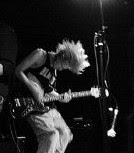
Said it would take two posts to take care of this week's good local shows, and here I am back for part two.
Saturday night: electro-tinged rock outfit Lean Hounds play at Cheer Up Charlies with Field Dress. The busy Megafauna are in action again at Hole in the Wall. Then Sunday instrumental metal titans Eagle Claw return from an East Coast tour with a show at Red 7.
Back with more shows next week.
Friday, April 15, 2011

Wednesday, April 13, 2011
Feels Like Summer
The show calendar for this week is so crammed with good local options that it will take more than one post to get them all across. Tonight, there's grunge revivalists the Bridge Farmers at Beerland with Leatherbag and The Pons. That's a free show, as is the Trailer Space gig with the all-screaming, instrument-swapping Dikes of Holland and Teenage News.
Tomorrow night (Thursday) offers the 7" release show at Hole in the Wall for La Snacks, with The Gary and The Zoltars in support. Great variety for that show, which gives you the chance to catch up with three of our favorite Austin bands all at once. Sources say it's only three bucks to get in, as well. Shells and Mermaid Blond also play Thursday at Scoot Inn for another recommended show. Pick your poison.
Friday night minimalist noisemakers Hatchet Wound and Soft Healer are at Beerland; one-man looping dynamo Daniel Francis Doyle returns to Mohawk; the new-wavey big band Rich Restaino & The Obits play Carousel Lounge; and the dissonant-but-beautiful Cruddy play a house party with Women in Prison (check Showlist Austin for more info).
Tomorrow night (Thursday) offers the 7" release show at Hole in the Wall for La Snacks, with The Gary and The Zoltars in support. Great variety for that show, which gives you the chance to catch up with three of our favorite Austin bands all at once. Sources say it's only three bucks to get in, as well. Shells and Mermaid Blond also play Thursday at Scoot Inn for another recommended show. Pick your poison.
Friday night minimalist noisemakers Hatchet Wound and Soft Healer are at Beerland; one-man looping dynamo Daniel Francis Doyle returns to Mohawk; the new-wavey big band Rich Restaino & The Obits play Carousel Lounge; and the dissonant-but-beautiful Cruddy play a house party with Women in Prison (check Showlist Austin for more info).
Tuesday, April 5, 2011
Springtime for Westy
So it only took me five days of writing exercises to realize what I really wanted to do was cover local music again. For giving me a kick in the tail, let me thank Coma in Algiers, Cruddy, and Cowabunga Babez. I saw all of those bands last weekend and it made me realize again that local music can be a lot of fun if you approach it with the right attitude.
Here's some stuff from local bands for you to look at and/or listen to:
Megafauna have a show on Thursday at Emo's and they also have a new, improved web presence with videos and words of wisdom from bassist Will Krause. As I've written before, the female-fronted trio is like Led Zeppelin meets Björk and their busy show schedule has rendered them into one of the tightest and most entertaining rock acts in town. We last saw them at Cheer Up Charlie's during SXSW and their set was full of new songs and cool riffs.
The Mole People have a free cover of Lou Reed's "I Can't Stand It" up for download on Soundcloud. It's a slower, more sensuous take on the song with funk guitar and an amused lead vocal. They have a new record almost ready for release called No Time for Love. I ran into some Mole People Saturday at the Parlor and learned that they have an alternate identity. When not everybody can make a show, they play as the Mole Men instead. The whole band of people should be together for a release show soon. Meanwhile, you can see their sister band Bike Problems Wednesday at Beerland or Saturday at the Parlor.
I've been listening to the new EP by Rocketboys leader Brandon Kinder, who has gone solo under the name The Wealthy West. The five polished songs tug at the heartstrings in a manner that will be familiar to fans of Quiet Company, with a little bit of the Eastern Sea's indie-folk style. Down-home production details on "Not a Pretty Pair" give a slight Americana flavor, and "Another Bad Idea" manages some singer-songwriter immediacy. The Wealthy West play Wednesday evening at the Cactus Cafe.
Here's some stuff from local bands for you to look at and/or listen to:
Megafauna have a show on Thursday at Emo's and they also have a new, improved web presence with videos and words of wisdom from bassist Will Krause. As I've written before, the female-fronted trio is like Led Zeppelin meets Björk and their busy show schedule has rendered them into one of the tightest and most entertaining rock acts in town. We last saw them at Cheer Up Charlie's during SXSW and their set was full of new songs and cool riffs.
The Mole People have a free cover of Lou Reed's "I Can't Stand It" up for download on Soundcloud. It's a slower, more sensuous take on the song with funk guitar and an amused lead vocal. They have a new record almost ready for release called No Time for Love. I ran into some Mole People Saturday at the Parlor and learned that they have an alternate identity. When not everybody can make a show, they play as the Mole Men instead. The whole band of people should be together for a release show soon. Meanwhile, you can see their sister band Bike Problems Wednesday at Beerland or Saturday at the Parlor.
I've been listening to the new EP by Rocketboys leader Brandon Kinder, who has gone solo under the name The Wealthy West. The five polished songs tug at the heartstrings in a manner that will be familiar to fans of Quiet Company, with a little bit of the Eastern Sea's indie-folk style. Down-home production details on "Not a Pretty Pair" give a slight Americana flavor, and "Another Bad Idea" manages some singer-songwriter immediacy. The Wealthy West play Wednesday evening at the Cactus Cafe.
Monday, February 21, 2011
Break Time?
Having a music blog in Austin, even one that practically no one reads, isn't entirely worthless. I've made a lot of good friends in bands and I'm glad of it. But I dedicated all of my time to this project for a full year and the results were not pretty... no job and a trip to the mental hospital.
After my eventful January, I didn't want to give blogging up entirely. I figured I'd keep doing show picks just to have a reason for people to keep sending me CD's in the mail. After a few half-hearted weeks, I don't see much point in recommending shows any more. The listings are easy to find for anyone who cares. Hardworking bands get the message out, one way or another. Most importantly, writing is making me totally miserable and lonely and that was never the point. Since I was 11 or so I always figured I ought to write about music, since I was a better writer than anybody I knew and I loved music more than anything else. But that's not how it works... to succeed as a music writer nowadays I would have to dedicate myself to locating opinions about music that means nothing to me. So before I go completely off the deep end, I'm quitting while I still have these relative shreds left of my dignity.
I'll still pass on show announcements on Twitter and Facebook. But no more Big Western Flavor. The last time I considered stopping, I wrote that the blog had "served its function." I meant that I had learned all I could from it and I wasn't going to make myself any happier in persisting. I may have been right the first time. You can't make inroads into the entertainment business merely by smashing your head against the wall until it falls. That goes for bands as well as writers.
After my eventful January, I didn't want to give blogging up entirely. I figured I'd keep doing show picks just to have a reason for people to keep sending me CD's in the mail. After a few half-hearted weeks, I don't see much point in recommending shows any more. The listings are easy to find for anyone who cares. Hardworking bands get the message out, one way or another. Most importantly, writing is making me totally miserable and lonely and that was never the point. Since I was 11 or so I always figured I ought to write about music, since I was a better writer than anybody I knew and I loved music more than anything else. But that's not how it works... to succeed as a music writer nowadays I would have to dedicate myself to locating opinions about music that means nothing to me. So before I go completely off the deep end, I'm quitting while I still have these relative shreds left of my dignity.
I'll still pass on show announcements on Twitter and Facebook. But no more Big Western Flavor. The last time I considered stopping, I wrote that the blog had "served its function." I meant that I had learned all I could from it and I wasn't going to make myself any happier in persisting. I may have been right the first time. You can't make inroads into the entertainment business merely by smashing your head against the wall until it falls. That goes for bands as well as writers.
Monday, February 14, 2011
Special for Valentine's
Tonight at The Grand on Airport Boulevard, A Giant Dog and the Flesh Lights play a Valentine's Day formal and it's free to get in. Pretty cool! Anna C. and I will be there. Oh, and a Valentine's treat for you and those you love today: New music from La Snacks! Let's see what we've got going the rest of the week.
WEDNESDAY If you enjoy your music loud and crusty, Eagle Claw and Bridge Farmers at Red 7 is an excellent pairing. The former is instrumental metal and the latter revivalist grunge but they're both really, really high-volume.
THURSDAY It's a record release show for The Sour Notes at Mohawk (more info and a stream here at Austin Sound), with Mother Falcon guesting on strings and For Hours and Ours in support. Meanwhile The Gary and Blue Kabuki hit Carousel Lounge. The Gary have a new record coming out real soon, too. It's called El Camino and I just got an advance... it's their first vinyl release and it was recorded by Steve Albini. The one and only.
FRIDAY The Zoltars, Dikes of Holland, and A Giant Dog play at... Emo's? Not Beerland? That can't be right. Also, We the Granada and Megafauna at Flamingo Cantina, with Sweetmeat. And new band The Magnificent Snails release their debut EP Baby Acid Trips at Club 1808. They have an indie rock-meets-worldbeat sound that's quite now; the EP is worth checking out.
SATURDAY I usually pick rock bands, so for a change of pace how about DJ Nick Nack and Bird Peterson at Beauty Bar? Been spinning Nick's Dearly Departed on and off since he handed me a download card at Fun Fun Fun Fest and it's cerebral, listening music... a contrast to the big beats he lays down as a club and hip-hop backing DJ. You can learn more about his world at the Crowd Control Records site.
WEDNESDAY If you enjoy your music loud and crusty, Eagle Claw and Bridge Farmers at Red 7 is an excellent pairing. The former is instrumental metal and the latter revivalist grunge but they're both really, really high-volume.
THURSDAY It's a record release show for The Sour Notes at Mohawk (more info and a stream here at Austin Sound), with Mother Falcon guesting on strings and For Hours and Ours in support. Meanwhile The Gary and Blue Kabuki hit Carousel Lounge. The Gary have a new record coming out real soon, too. It's called El Camino and I just got an advance... it's their first vinyl release and it was recorded by Steve Albini. The one and only.
FRIDAY The Zoltars, Dikes of Holland, and A Giant Dog play at... Emo's? Not Beerland? That can't be right. Also, We the Granada and Megafauna at Flamingo Cantina, with Sweetmeat. And new band The Magnificent Snails release their debut EP Baby Acid Trips at Club 1808. They have an indie rock-meets-worldbeat sound that's quite now; the EP is worth checking out.
SATURDAY I usually pick rock bands, so for a change of pace how about DJ Nick Nack and Bird Peterson at Beauty Bar? Been spinning Nick's Dearly Departed on and off since he handed me a download card at Fun Fun Fun Fest and it's cerebral, listening music... a contrast to the big beats he lays down as a club and hip-hop backing DJ. You can learn more about his world at the Crowd Control Records site.
Monday, February 7, 2011
In the Flesh
It's a real slow week for shows. I hope you'll write in and tell me if I'm wrong, but other than the XTC hoot night Saturday at the Carousel Lounge, I don't see too much to recommend this week. As for that gig, featuring Baby Robots and Bee vs. Moth among others, I really hope somebody does "Earn Enough for Us." And "Snowman." And "Senses Working Overtime." And the whole Black Sea record. But I digress.
Since there's not a lot of shows this week to write about, I guess I'll spend a second talking about one from last week. That Girls Rock benefit ended up being a heck of a good show, cold weather notwithstanding. I enjoyed all five bands! Bottle Service impress me each time I see them... they have winning chemistry. Planets have morphed from a rickety indie rock band into a hard rock powerhouse in front of our very eyes. Cruddy are a new name to me but I admire the way their discordant songs stop and start on dimes. They have a weird inbred logic working that might not be pretty but is definitely rock and roll. Yellow Fever are a band I've seen before and not liked, but I'm coming around on them. Their singer has an amazing voice, and although I don't like all of their songs I do like their drummer's cleverness and the tricks they pull out to keep being a duo from becoming monotonous. I made my mind up about them before too quickly. That hardly makes them alone among Austin bands. It's a good thing we're making second chances a major theme in 2011.
How about the Flesh Lights, though? What a good example of how writing show previews based on recorded material is doomed to fail. The Flesh Lights' recorded output is really good -- two excellent singles, with the A-side of the green one, "Jaye," standing as the song best lodged in my head by repeated plays -- but it doesn't give you any idea what they're like live. They're a force, with a hurricane starting on the stage sweeping the front of the audience up into it and pretty much everybody front to back shaking like their lives depended on it by mid-set. Their records are good, but they're not wild and primal the way they sound as a live band. The guitar races ahead of the bass and drums and it doesn't really matter when it laps them, because everyone's giving as much as they can. Even late at night on a frosty night, the crowd is ready to move when the Flesh Lights will it. I'm not leaving early when they're late on a bill ever again.
UPDATE Missed some stuff on Saturday: My homeboys in World Racketeering Squad are at the Parlor, the tread-laying post-hardcore kids in Markov hit up Trailer Space, and STEREO IS A LIE bring their high-intensity melodies to Ghost Room. Plus Follow That Bird! and Dikes of Holland at Mohawk. No excuse if you end up staying in on Saturday night!
Since there's not a lot of shows this week to write about, I guess I'll spend a second talking about one from last week. That Girls Rock benefit ended up being a heck of a good show, cold weather notwithstanding. I enjoyed all five bands! Bottle Service impress me each time I see them... they have winning chemistry. Planets have morphed from a rickety indie rock band into a hard rock powerhouse in front of our very eyes. Cruddy are a new name to me but I admire the way their discordant songs stop and start on dimes. They have a weird inbred logic working that might not be pretty but is definitely rock and roll. Yellow Fever are a band I've seen before and not liked, but I'm coming around on them. Their singer has an amazing voice, and although I don't like all of their songs I do like their drummer's cleverness and the tricks they pull out to keep being a duo from becoming monotonous. I made my mind up about them before too quickly. That hardly makes them alone among Austin bands. It's a good thing we're making second chances a major theme in 2011.
How about the Flesh Lights, though? What a good example of how writing show previews based on recorded material is doomed to fail. The Flesh Lights' recorded output is really good -- two excellent singles, with the A-side of the green one, "Jaye," standing as the song best lodged in my head by repeated plays -- but it doesn't give you any idea what they're like live. They're a force, with a hurricane starting on the stage sweeping the front of the audience up into it and pretty much everybody front to back shaking like their lives depended on it by mid-set. Their records are good, but they're not wild and primal the way they sound as a live band. The guitar races ahead of the bass and drums and it doesn't really matter when it laps them, because everyone's giving as much as they can. Even late at night on a frosty night, the crowd is ready to move when the Flesh Lights will it. I'm not leaving early when they're late on a bill ever again.
UPDATE Missed some stuff on Saturday: My homeboys in World Racketeering Squad are at the Parlor, the tread-laying post-hardcore kids in Markov hit up Trailer Space, and STEREO IS A LIE bring their high-intensity melodies to Ghost Room. Plus Follow That Bird! and Dikes of Holland at Mohawk. No excuse if you end up staying in on Saturday night!
Monday, January 31, 2011
Enough January
Ready for a new month? I am. February brings my birthday and Anna C.'s as well, plus beloved holidays such as Valentine's Day, Groundhog Day, and Presidents' Day. It's a heck of a month. Start it off right with some local shows.
TUESDAY The Deerhoof afterparty at Mohawk is for serious: Sunset, Cartright, and Zorch will light it up inside after the headliners do their thing outside. I'm on the record as saying Zorch are my favorite band in Austin right now and this is your last chance to see them before the festival in March. Cartright are a band I am curious to learn more about. I saw them for the first time playing with Zorch on New Year's Eve. Zorch's full keyboard array wasn't working, so it was a bit of an experiment, but it still left me wanting to find out what the band Cartright sounded like in their own right. They also make really beautiful flyers.
WEDNESDAY One-man show Eagle Eye Williamson is at Club Deville. Haven't seen him live yet but I know from recordings that he does blues at its most primitive, one guy playing drums and guitar and howling. If you like unique performers, might be a good option. Anna recommends the punk band Teenage News who are at Beerland.
THURSDAY Just saw The Zoltars for the first time at a house party yesterday. I liked them. If you like the honesty and directness of the Moldy Peaches, this band might be for you. Loved the way their drummer kicked a tambourine with his foot instead of using a big loud bass drum. Kept the focus on the lyrics and melodies.
FRIDAY SuperLiteBike and Bali Yaaah are at Red 7. Haven't seen the latter yet, though their songs online have a certain hypnotic quality to them. Remains to be seen whether the effect their bass, guitar, and keyboards have through headphones translates to the stage. But SuperLiteBike are legit... one of my favorite modern rock-arena acts in Austin. The last time I saw them I was impressed by how their set flew by like clockwork, no pauses in between songs and changes sharply choreographed. They stand out from the norm here. The Girls Rock benefit at Beerland is worth a look too: Flesh Lights, Planets, and Bottle Service are appearing among others. We saw Planets last night and they were forceful. Wouldn't have expected that from the first few shows of theirs we went to. But Anna and I are all about ladies who love it loud and that's the spirit for this show.
SATURDAY Haven't seen them live yet but I really dig the Serious Tracers seven-inch. They're at Ruta Maya Saturday with a Huey Lewis tribute band. No, really. Yes, I know. That is awesome.
SUNDAY OBN III's and The Millipede at Beerland. I'm getting a lot more punk as I assimilate in Austin. Why? Because watching bands have a really fun time when they play shows is way preferable to watching them be miserable. The garage scene here is all about having a good time with your friends, I'm learning, and that's a really hard objective to be critical about.
TUESDAY The Deerhoof afterparty at Mohawk is for serious: Sunset, Cartright, and Zorch will light it up inside after the headliners do their thing outside. I'm on the record as saying Zorch are my favorite band in Austin right now and this is your last chance to see them before the festival in March. Cartright are a band I am curious to learn more about. I saw them for the first time playing with Zorch on New Year's Eve. Zorch's full keyboard array wasn't working, so it was a bit of an experiment, but it still left me wanting to find out what the band Cartright sounded like in their own right. They also make really beautiful flyers.
WEDNESDAY One-man show Eagle Eye Williamson is at Club Deville. Haven't seen him live yet but I know from recordings that he does blues at its most primitive, one guy playing drums and guitar and howling. If you like unique performers, might be a good option. Anna recommends the punk band Teenage News who are at Beerland.
THURSDAY Just saw The Zoltars for the first time at a house party yesterday. I liked them. If you like the honesty and directness of the Moldy Peaches, this band might be for you. Loved the way their drummer kicked a tambourine with his foot instead of using a big loud bass drum. Kept the focus on the lyrics and melodies.
FRIDAY SuperLiteBike and Bali Yaaah are at Red 7. Haven't seen the latter yet, though their songs online have a certain hypnotic quality to them. Remains to be seen whether the effect their bass, guitar, and keyboards have through headphones translates to the stage. But SuperLiteBike are legit... one of my favorite modern rock-arena acts in Austin. The last time I saw them I was impressed by how their set flew by like clockwork, no pauses in between songs and changes sharply choreographed. They stand out from the norm here. The Girls Rock benefit at Beerland is worth a look too: Flesh Lights, Planets, and Bottle Service are appearing among others. We saw Planets last night and they were forceful. Wouldn't have expected that from the first few shows of theirs we went to. But Anna and I are all about ladies who love it loud and that's the spirit for this show.
SATURDAY Haven't seen them live yet but I really dig the Serious Tracers seven-inch. They're at Ruta Maya Saturday with a Huey Lewis tribute band. No, really. Yes, I know. That is awesome.
SUNDAY OBN III's and The Millipede at Beerland. I'm getting a lot more punk as I assimilate in Austin. Why? Because watching bands have a really fun time when they play shows is way preferable to watching them be miserable. The garage scene here is all about having a good time with your friends, I'm learning, and that's a really hard objective to be critical about.
Subscribe to:
Posts (Atom)